
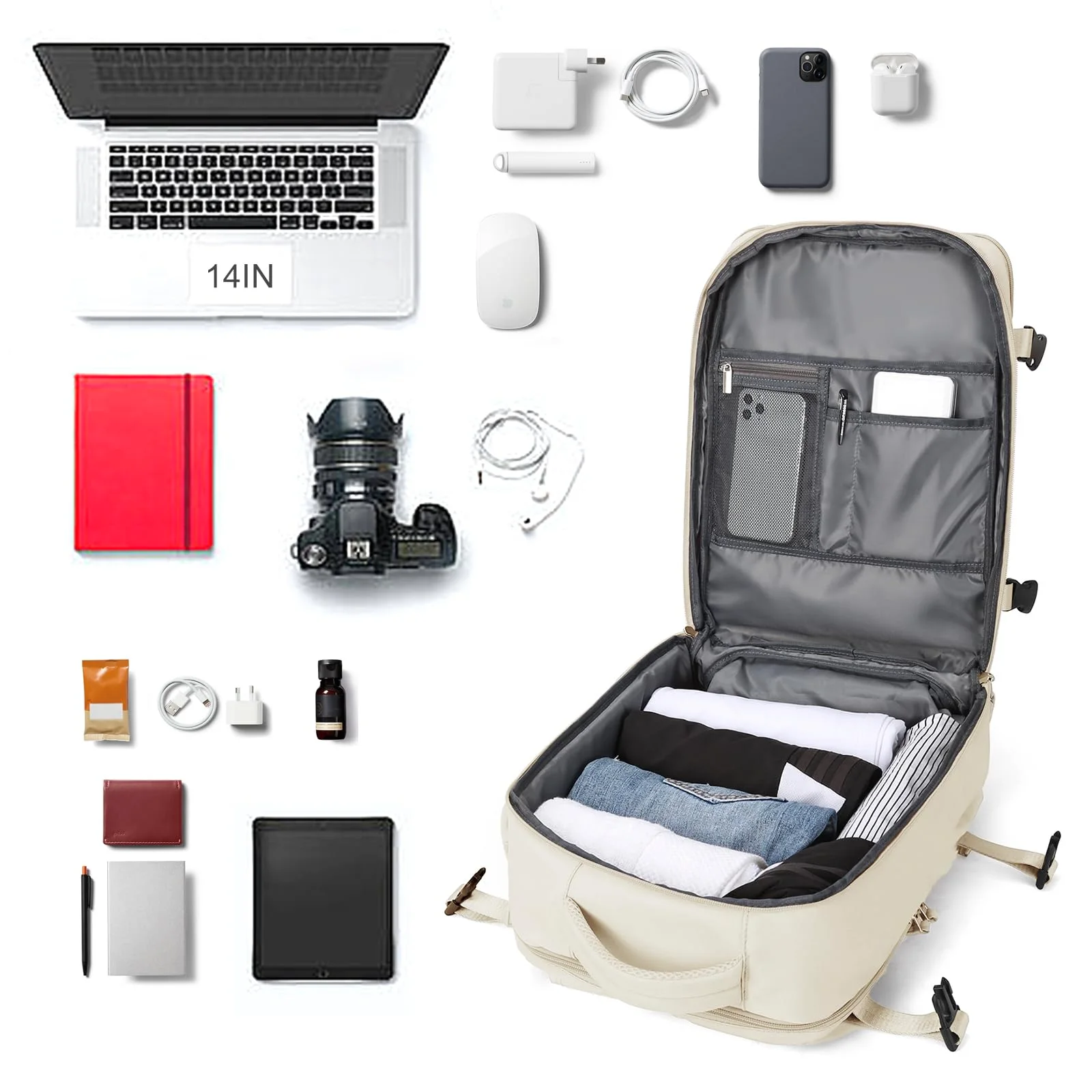
What 25 liters looks like before you start
Our 25 liter travel backpack measures 16.5 x 12.6 x 7.9 inches empty by hand and weighs 1.7 pounds. It has a zipped shoe pocket at the base, a lined wet pocket, a sleeve for a laptop up to 15.6 inches and a second sleeve for a 13 inch tablet. There are two main pockets, a zipped pocket against your back, and a USB port that works with your own power bank. The bag does not contain a battery.
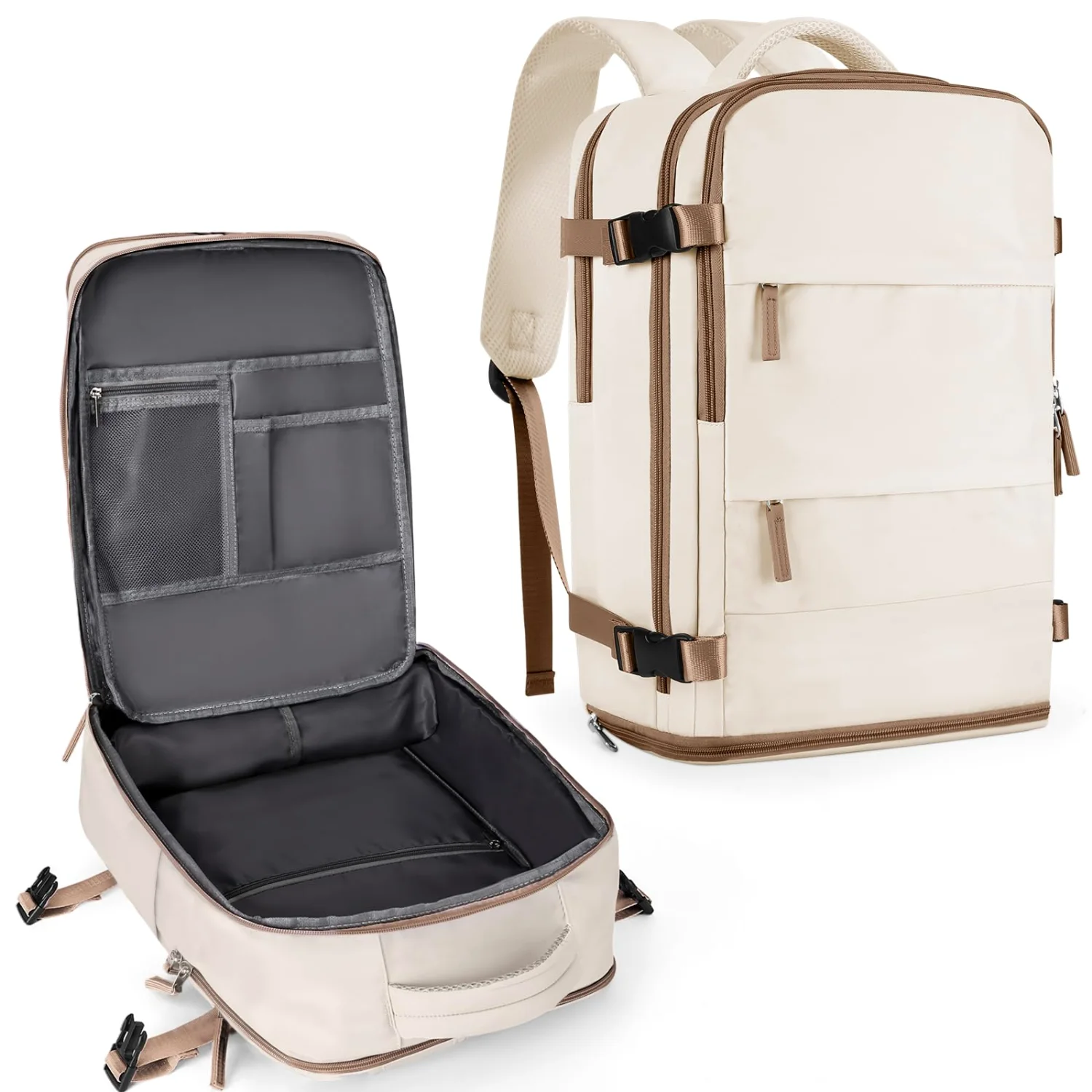
By its measurements it is within the 18 x 14 x 8 inch personal item size that American, Frontier and Allegiant print, and within JetBlue's 17 x 13 x 8. A packed soft bag measures bigger than an empty one, so plan for some give when you fill it. If space is tight consider the 25 liter vacuum version that comes with a vacuum bag and a small pump. Compressed clothes take less room but they weigh the same.
Think of the pack as layers. The zipped shoe pocket at the base is for shoes or anything you want separate from clothing. The laptop and tablet have their own sleeves. Front pockets offer quick access. Mapping your items to those compartments before you fold or roll will save time at the gate.
The bottom layer: shoes and heavy things
Start from the base and build up. Place one pair of shoes into the zipped shoe pocket at the bottom if they fit. That pocket keeps dirt away from garments and keeps weight low in the pack. If your shoes are bulky take them off and wear the bulkiest pair on the plane. Wearing heavier footwear saves a lot of room.
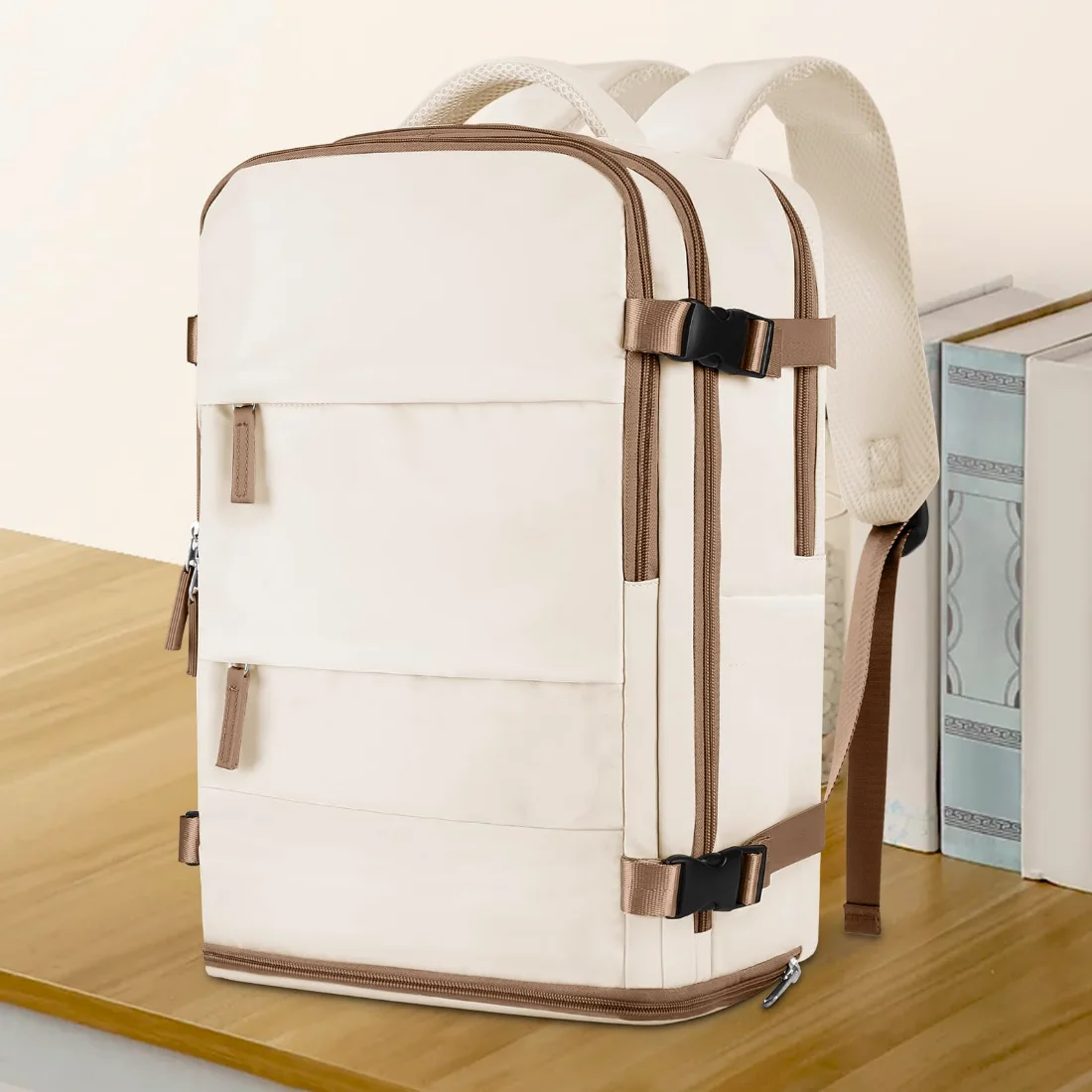
Heavy items belong close to your spine. Pack the heaviest things on the side of the main compartment nearest your back, so the weight sits close to your center of gravity. A hardcover guidebook, a small toiletry kit in a hard case, and a packed power bank also work well against that same plane. Keeping heavy things centered reduces strain when you carry the bag for long stretches.
Fill gaps with denser items next. Socks, underwear, and rolled tees compress into the space around shoes and electronics. Use the lined wet pocket for trainers that are slightly damp after a walk. A careful layout at the bottom keeps the pack balanced and stable. The bag is light on its own. Your placement of heavy items decides whether it feels light or heavy on the move.
Clothes: rolling, folding and what to wear on the plane
Two main pockets decide the wardrobe. Clothes for three days go in the larger one, and whatever does not fit there does not come. Pick two bottoms and three tops that all work together, so every top goes with either bottom, and choose fabrics that come out of a rolled bundle without deep creases.
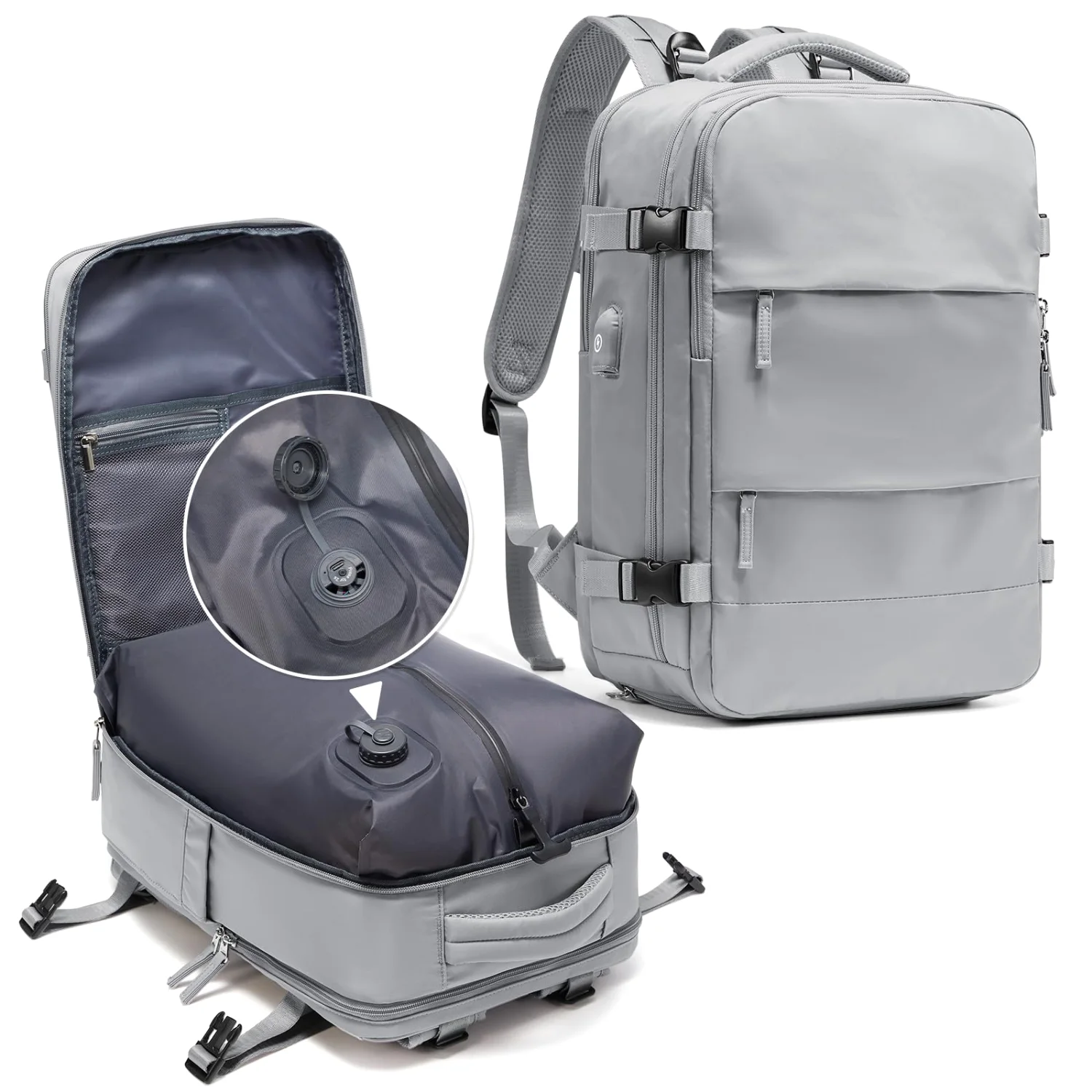
Rolling saves space for soft items and works best for t-shirts, lightweight long sleeves, and thin knitwear. Fold thicker garments flat and place them on top of the rolled cores so they do not wrinkle where you do not want creases. A vacuum bag will compress everything more, leaving extra room for a jacket or souvenirs. Compression reduces volume, not weight.
Wear your bulkiest items on travel days. Put on your heaviest jacket and your most substantial shoes. That frees internal room. Carry the jacket if you expect warmth at your destination. Tuck a thin travel scarf into the top pocket for sudden chills. Layering on the plane keeps you comfortable through cabin temperature swings and saves space inside the pack.
Limit the number of single-use items. One set of sleep clothes can double as a second layer at the hostel. A small pack towel fits into a corner or the lined wet pocket after it dries. Sticking to a small color palette speeds outfit decisions and reduces what you need to pack.
The front and the back: things you need at the gate
Organize for fast access. Use the front pocket for boarding documents, passport, a pen, and anything you reach for while waiting. A tablet in the 13 inch sleeve is easy to pull for a movie or reading. Keep snacks near the top so you do not have to dig through the main compartment.
The zipped pocket against your back is more secure while you walk through crowded areas. Store less frequently accessed valuables there. A small wallet or spare cash fits well. That pocket is not for items you need at the gate. Reserve it for odds and ends you want protected while on the move.
Two main pockets mean a natural split. Use one for clothing and the other for gear and toiletries. The lined wet pocket accepts damp swimsuits, a damp shirt, or anything you cannot leave loose. Notice where the USB port exits the bag. A charging cable routed from an internal pocket to the port makes it easy to charge a phone while waiting without opening the main compartment.
Pack in the order you will unpack. The boarding pass and the passport are the last things in and the first things out, so they go in the zip against your back. Snacks and a charger go in the front pocket. The clothes you will not touch until the hotel go deepest in the main pocket.
Liquids, chargers and the security line
Prepare liquids for the TSA process. Place all liquid containers of 3.4 ounces or 100 milliliters or less into one quart-sized bag and have it ready. That bag should sit where you can remove it quickly at the checkpoint. Keep full-size bottles at home or in checked baggage.
Chargers and power banks deserve a plan. The USB port on our bag works with your own power bank. The bag does not include a battery. FAA rules require that power banks and spare lithium batteries remain in carry-on baggage only. They also come out of a bag that is checked at the gate. Keep your power bank accessible and packed where you can remove it on demand.
Label or roll your cables into a small pouch for quick access. A charging cable run from an internal pocket to the external USB port allows you to top off a phone while you wait. A compact charger and one cable that serves multiple devices reduce clutter.
After screening, step away from the belt before you repack. Put the quart bag back in the same pocket every time and slide the laptop into its sleeve before anything else, so the bag closes flat and still measures what it did at home.
A packing list for three days
Here is the list we would start from for a 25 liter bag.
- Three shirts or tops that mix and match.
- Two bottoms, for example one pair of pants and one pair of shorts or a second pair of pants.
- One lightweight jacket that you can wear on the plane.
- One pair of shoes worn on travel day and one pair in the zipped shoe pocket.
- Three pairs of underwear and three pairs of socks.
- Sleepwear that can double as a lounge layer.
- Toiletry kit with items in 3.4 ounce or 100 milliliter containers packed into a single quart-sized bag.
- Small towel or pack towel that fits easily into a corner.
- Laptop up to 15.6 inches in the laptop sleeve and a 13 inch tablet in its sleeve if needed.
- Power bank, chargers, and one multiuse cable in an easy-access pouch. The bag has no battery.
- Travel documents, passport, boarding pass, a pen, and any necessary medication.
- A reusable water bottle, snacks, and a few bandages.
If you can do laundry on the second night, cut the shirts and socks to two and use the space for a jacket.
A question about a size or a pocket? Write to underseat@coowoz.org and everyone at COOWOZ will answer.